Building the Learning System Behind the Product
How I replaced fragmented, simulation-by-simulation design decisions with a scalable architecture governing objectives, assessment, and progression across an entire platform
Context
When Labster's simulation catalog started scaling, we began to experience classic scaling problems. Every new simulation required the same design decisions to be made from scratch, and every inconsistency added friction for learners moving between experiences.
The challenge wasn't improving individual simulations. It was building a system that could govern how all of them worked.
Role & Scope
I served as Senior Learning Experience Designer and the primary learning design authority, owning learning architecture from definition through to operationalization.
That meant:
Defining the end-to-end learning architecture for the simulation ecosystem
Establishing shared pedagogical frameworks and learner-centered design principles
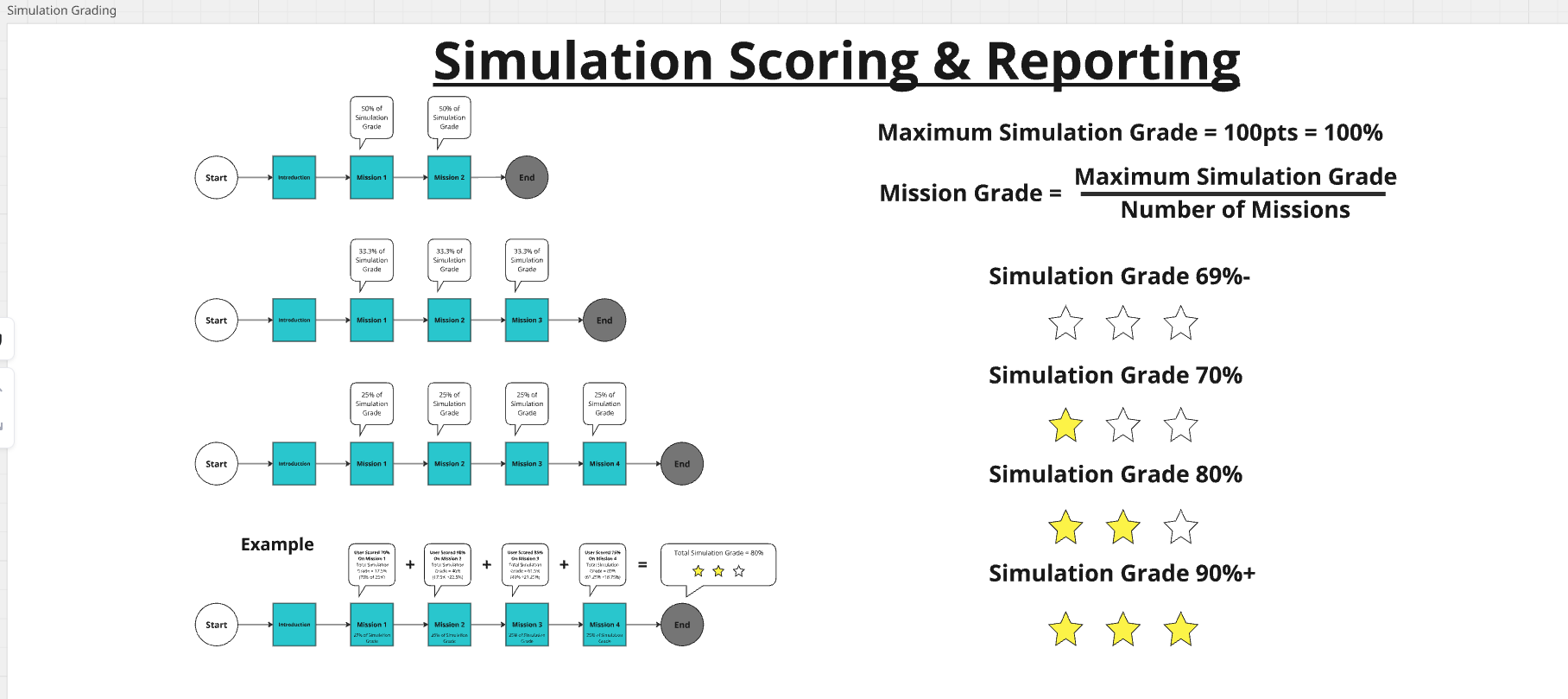
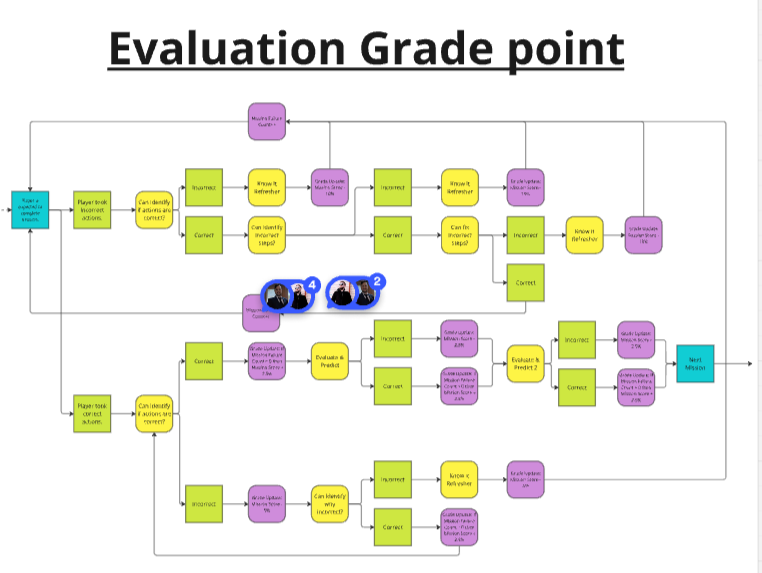
Designing a scalable scoring and grading system for complex, branching simulations
Embedding learning logic directly into product and engineering workflows
I held decision-making authority over learning design standards and system-level trade-offs throughout.
Architecture as a Product System
I approached the problem by treating learning architecture as a product system, not a documentation exercise.
I standardised learning intent and logic to ensure consistency in learner expectations, how learners were assessed, and how feedback and progression worked, while allowing experiential variation.
This architecture defined:
Clear learning objective structures
Explicit assessment moments within simulations
Shared scoring and grading logic that supported non-linear paths
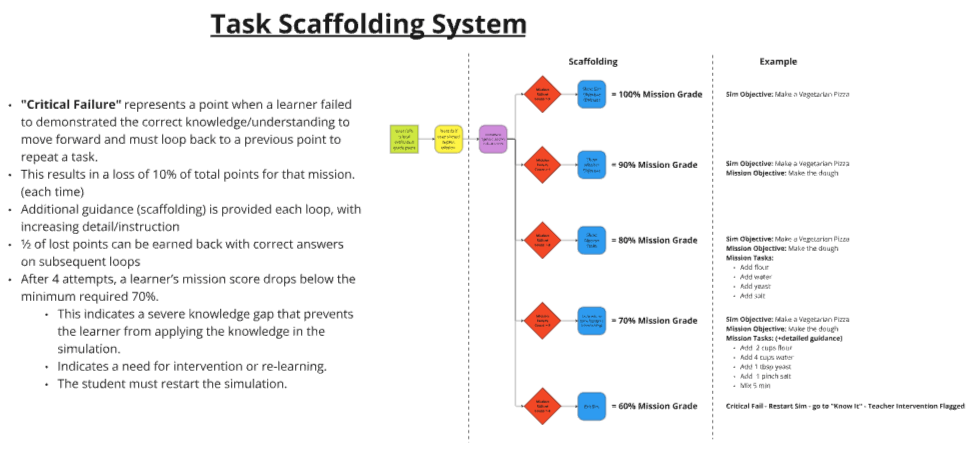
Consistent feedback and progression rules
Designing for Branching Complexity
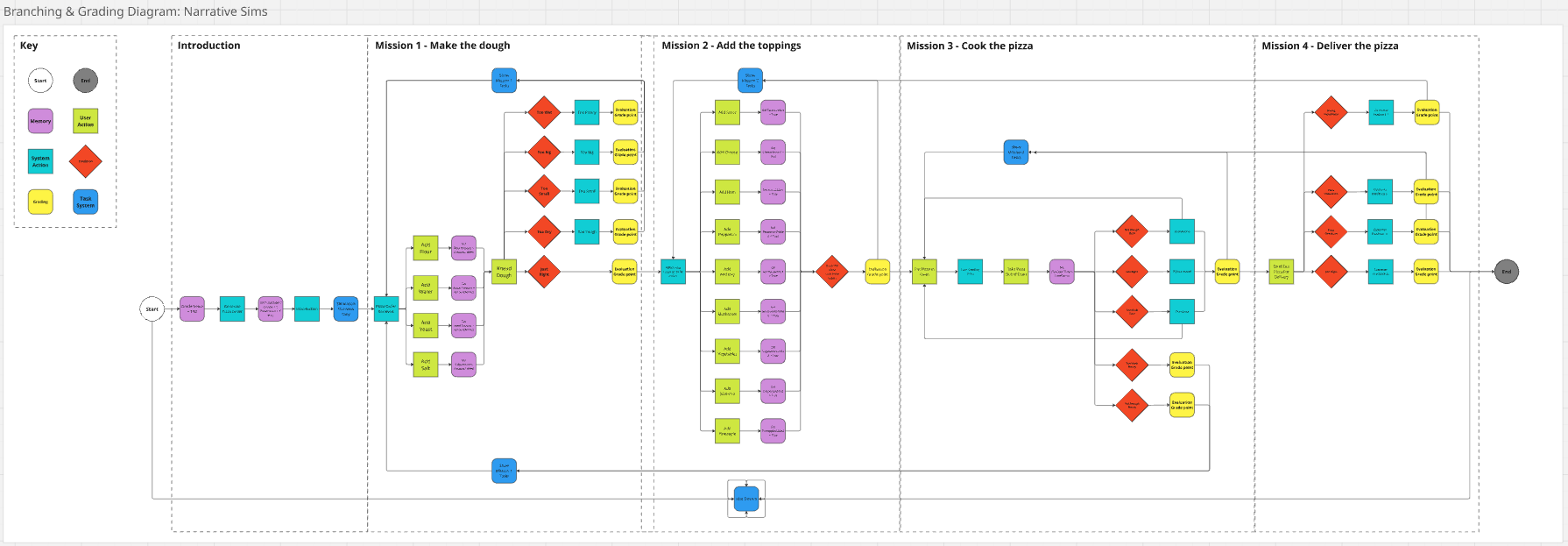
Simulation-based learning rarely produces linear journeys or binary outcomes. Learners make decisions, backtrack, recover from errors, and arrive at partial success states. A scoring system that doesn't account for individuality misrepresents what learners actually accomplished.
I designed a scoring and grading framework built for this reality:
one that weighted decisions meaningfully
accounted for multiple valid learner paths
and evaluated partial success without oversimplifying complex problem-solving.
This resulted in performance measurement that actually reflected progress, not just completion.
Making It Stick
Learning architecture only works if it improves day-to-day processes. I embedded this architecture into production through shared standards, templates, and documentation that teams could apply without needing to interpret.
These standards answered the questions that are otherwise decided ad hoc:
How should objectives be written and mapped?
Where and how should assessment occur?
What feedback rules apply across simulations?
How should progression behave in branching scenarios?
The result was a system teams could work with without accumulating design debt with every new simulation.
Outcomes & Impact
Adopted across approximately 70–80% of new simulation development within the first year
Estimated 30–40% reduction in late-stage learning design rework, particularly in complex branching simulations
Learning-related decision cycles between design, product, and engineering shortened from weeks to days
Established the foundational infrastructure later required for learning gains measurement and AI-assisted production pipelines